
HoLEP
KLĪNIKA LUC · HoLEP

Holmium laser enucleation of the prostate (HoLEP)

Modern minimally invasive treatment for benign prostate enlargement without an external incision.

Gold standardfor surgical treatment of benign prostate enlargementAround 2,000laser prostate operations
01

HoLEP — gold standard

This information does not replace a medical consultation. The appropriate treatment is selected by a urologist after examining the patient.

Benign prostatic hyperplasia (BPH)

Prostate conditions are often age-related and may cause lower urinary tract symptoms in men over 50. BPH is not prostate cancer and does not turn into cancer, although both conditions may occur at the same time. Urinary symptoms should therefore always be assessed by a doctor.

What is the prostate?

The prostate lies below the bladder and surrounds the urethra. It produces part of the seminal fluid and contributes to ejaculation. A healthy prostate is usually about 15–25 cm³, but it may enlarge with age.

02

Prostate examinations

01

PSA blood test

PSA is a protein produced by the prostate. Its level may rise with benign prostate enlargement, inflammation or prostate cancer. PSA can help detect prostate cancer early, but a raised result does not by itself mean cancer and a normal result does not exclude it completely.

02

Digital rectal examination

This examination helps assess the approximate size, shape and consistency of the prostate. Only the part adjacent to the rectum can be felt, so ultrasound may also be used for a more complete assessment.

03

Uroflowmetry and post-void residual measurement

Uroflowmetry measures the strength and rate of urine flow. Bladder ultrasound is then used to measure residual urine. These tests are particularly important when urination is difficult.

04

Transrectal ultrasound of the prostate (TRUS)

TRUS measures the prostate accurately and assesses its structure. It is performed as an outpatient procedure using a special probe inserted into the rectum. If indicated, prostate biopsy may be performed after appropriate preparation.

HoLEP

What is HoLEP?

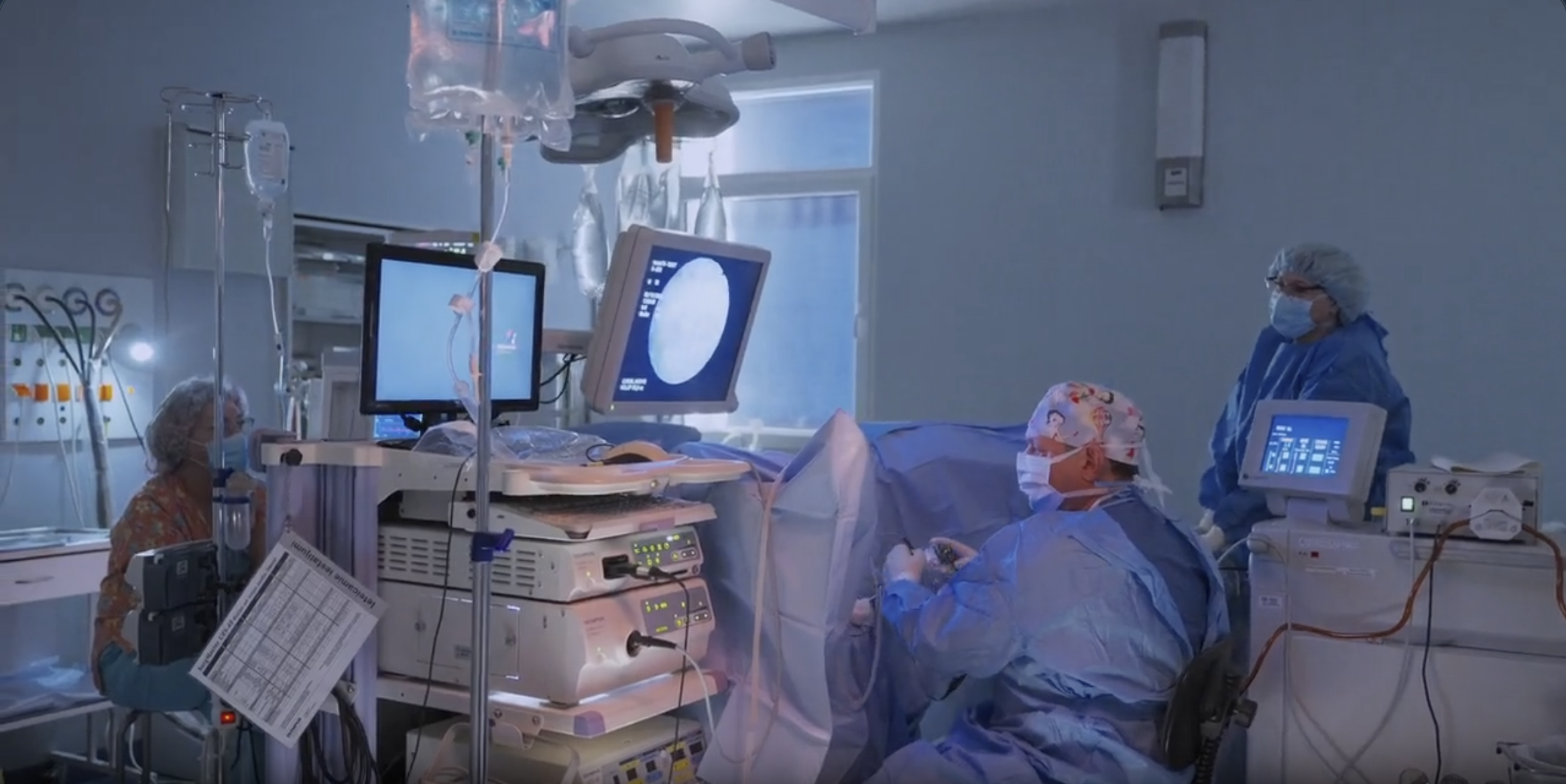
During HoLEP, enlarged prostate tissue is separated from the prostate capsule using a holmium laser. The operation is performed through the urethra without an external incision. The tissue is fragmented in the bladder with a morcellator and removed for histological examination.

01

Laser

02

Enucleation

03

Histology

Who is HoLEP suitable for?

The procedure is especially suitable for a large prostate, including volumes above 80 cm³, but can also be used for a smaller prostate. There is practically no upper size limit. HoLEP may also be suitable for patients taking blood-thinning medication; any changes to medication must be decided individually by the doctor.

What can you expect?

The procedure is usually performed under general or spinal anaesthesia. A urinary catheter is inserted after surgery and is most often removed the next day. Patients generally stay in the clinic for less than 24 hours, although the exact treatment plan is determined by the doctor.

03 · Why HoLEP

Benefits of HoLEP

HoLEP combines complete adenoma tissue removal with a minimally invasive approach, rapid recovery and durable results.

01

No external incision

02

Suitable even for a very large prostate

03

Minimal blood loss

04

Less postoperative pain

05

Short bladder catheterisation time

06

Short clinic stay

07

Rapid recovery

08

Histological examination of removed tissue

04

Before surgery

Before surgery you will need consultations with a urologist and anaesthesiologist, blood tests and any examinations prescribed by the doctor. Tell your doctor about all regular medication, especially medication affecting blood clotting. Do not stop medication without medical advice.

05

After surgery

06

Possible side effects

  • Blood in the urine for several days after the procedure
  • Frequent, urgent or painful urination early after surgery
  • Temporary urinary leakage during the adaptation period
  • Retrograde ejaculation — semen enters the bladder during ejaculation
07

Possible risks

  • Urinary retention and temporary need for a catheter again
  • Urinary tract infection
  • Narrowing of the urethra (stricture)
  • Rare need for additional treatment
  • The risk of erectile dysfunction after HoLEP is low, but individual risks should be discussed with your doctor
08

Results

Urine flow usually improves soon after surgery. HoLEP is more effective than medication and comparable in effectiveness to open adenomectomy, while causing less surgical trauma and allowing faster recovery.

Olegs Hublarovs
Certified urological surgeon

Olegs Hublarovs

Member of the Latvian and European Associations of Urology. HoLEP technology mentor authorised to train other specialists. The first urological surgeon in the Baltics to introduce holmium laser enucleation for benign prostate enlargement. More than 30 years of experience in urology.

Book a consultation →

This information does not replace a medical consultation. The appropriate treatment is selected by a urologist after examining the patient.

Book a consultation← Back to urology